

Florida ADU Rules: What Tampa Bay Homeowners Need to Know
Could an ADU Add Flexibility to Your Florida Home? What Tampa’s Rule Changes Mean for Homeowners

A small backyard cottage can mean a lot of different things to a Florida homeowner.
It might be a comfortable space for aging parents, a little extra privacy for adult children, a guest retreat, a home office, or a flexible living area that changes with your family. In some situations, it may also create rental potential: but only where legally permitted and financially practical.
The first question, though, is not, “How much will it cost to build?”
It is: “Is an accessory dwelling unit allowed on this specific property?”
That question is especially important now that Tampa has highlighted increased ADU activity following 2024 rule changes. Homeowners in Tampa and the surrounding Tampa Bay area are paying closer attention, but the rules are not identical across Hillsborough County, Pasco County, Hernando County, and Citrus County.
Here is what homeowners and prospective buyers should know.
What Is an ADU?
An accessory dwelling unit, commonly called an ADU, is an independent living unit located on the same property as a primary home. It typically includes:
- A kitchen
- A bathroom
- A sleeping area
- Its own entrance
- Independent living space
You may also hear ADUs called in-law suites, guest cottages, backyard cottages, secondary living units, or mother-in-law suites.
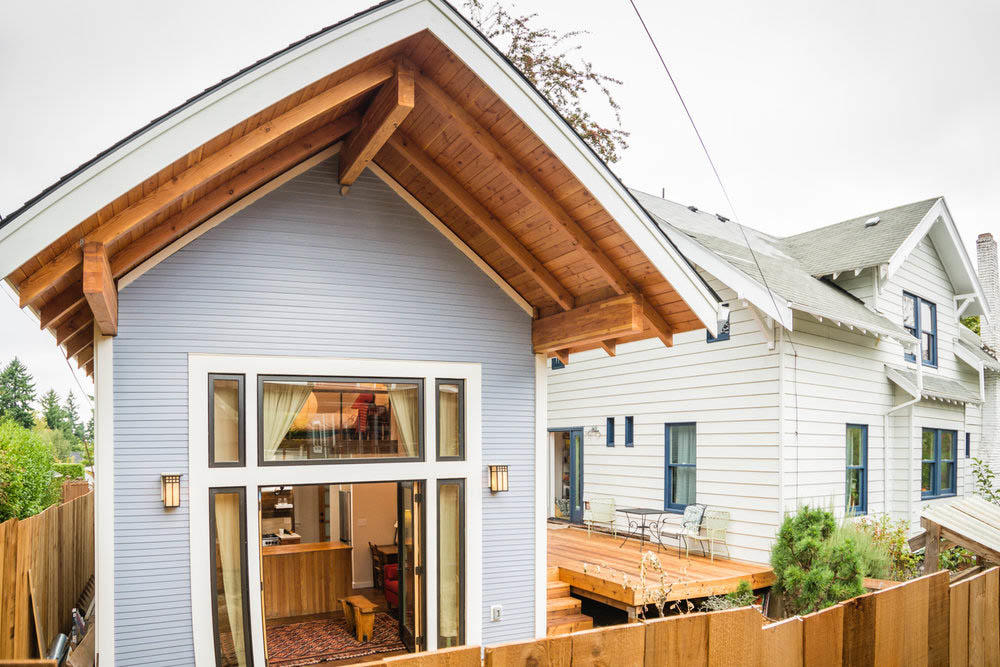
An ADU may be attached to the main home, located above or beside a garage, or built as a detached structure in the backyard. The exact definition and requirements vary by jurisdiction, including rules for size, setbacks, parking, utilities, rental use, and owner occupancy.
What Changed in Tampa?
The City of Tampa reported in August 2026 that more homeowners are exploring ADUs after regulatory changes took effect in 2024.
Those changes did two important things:
- They expanded the allowable area where ADUs can be constructed.
- They removed the previous requirement that the property owner live in the main home.
Under the updated approach described by the City, the owner may live in the principal structure or in the ADU, subject to applicable rules and requirements.
The City also encourages homeowners to confirm that their property is located in an eligible area and to review development and permitting standards before beginning a project. Tampa’s official Accessory Dwelling Units page includes maps, general standards, and information about the difference between an ADU and an Extended Family Residence.
The numbers so far
According to the City’s current news release, 28 homeowners have initiated the process since the changes, and seven have completed construction.
One example is a roughly 400-square-foot ADU in Sulphur Springs. The homeowner described several possible future uses, including space for aging parents, a home office, a rec room, or a rental unit.
That is the practical appeal of an ADU: it does not have to serve only one purpose forever.
What homeowners still need to verify
Tampa’s general ADU page explains that ADUs are permitted in designated areas, while properties outside those areas may fall under different Extended Family Residence requirements. The main residence may also need to be owner-occupied in certain situations.
Because the City’s news release describes changes that expanded eligibility, homeowners should verify the rules that apply to their property rather than relying on an older article, social media post, or a neighbor’s experience.
The original WFLA Facebook post is a helpful starting point for the conversation, but official city or county staff should be the final source for current zoning and permitting requirements.
How Homeowners Might Use an ADU
An ADU can support several different lifestyle goals.
Aging parents or adult children
A separate living unit may allow family members to stay nearby while maintaining some independence. This can be particularly useful when the main home does not have a first-floor bedroom, private entrance, or accessible bathroom.
Guests and extended family
Florida homeowners often host family and friends throughout the year. A detached guest cottage can create privacy and reduce pressure on the main home during longer visits.
A home office or creative space
For someone working remotely, running a business, or needing a quiet studio, an ADU may offer separation between home life and work life. It can also become a hobby room, music space, or flexible retreat.
A possible rental
A legally permitted ADU may offer rental potential where local rules, HOA restrictions, insurance requirements, and other regulations allow it. However, rental income is never guaranteed. Owners should research realistic rents, vacancy, maintenance, management, taxes, insurance, and financing before making the decision.
What This Means for Sellers of Florida Lifestyle Homes
For sellers of distinctive Florida properties, ADU potential can be an important part of the property conversation.
A home with a permitted guest cottage, detached in-law suite, or documented secondary living area may appeal to buyers looking for multigenerational flexibility, guest space, a home office, or possible rental use.
But an ADU does not automatically increase a home’s value by a specific amount. The impact depends on the quality of the space, its legal status, location, condition, utility setup, buyer demand, and comparable sales.
There is also a major difference between:
- A permitted ADU with documented inspections and final approvals
- An unpermitted garage conversion described casually as an “extra apartment”
If you are preparing to sell, gather permits, plans, invoices, certificates, utility information, and any zoning approvals. Clear documentation helps buyers and their professionals evaluate the property more confidently.
You can also review Stacy’s Home Selling Tips Resource Center, explore current listings, or request a home evaluation before deciding whether an ADU project makes sense financially.
Waterfront, Acreage, and Community Properties Need Extra Homework
ADU feasibility can become more complicated on waterfront, acreage, and planned-community properties.
Flood zones may affect elevation, foundation design, insurance, and where a structure can be placed. Waterfront lots may have buffers, drainage concerns, access limitations, or environmental restrictions. Acreage properties may use septic systems or wells that need to support an additional living unit.
In a deed-restricted community, the HOA or property owners’ association may have rules about detached structures, exterior appearance, rentals, parking, or construction activity. These restrictions can be more limiting than local zoning.
Before you assume a backyard cottage is possible, check:
- Flood-zone requirements
- Septic or well capacity
- Utility connections
- Stormwater and drainage
- Access for emergency services
- Parking
- HOA or deed restrictions
- Insurance implications
Tampa Rules Are Not Pasco or Hernando Rules
Tampa’s rules do not automatically apply to Pasco County or Hernando County.
For an ADU in Pasco County, homeowners should consult current county zoning and building staff and review the Pasco County Land Development Code Amendments page. County regulations can be updated, so make sure you are reviewing current information.
For an ADU in Hernando County, start by identifying the property’s zoning district. The county’s Zoning Districts page explains that different districts have different permitted uses, setbacks, and dimensional requirements. The Hernando County GeoHub can also help you review land-use information, flood zones, wetlands, setbacks, and other property standards.
For properties in Brooksville, Spring Hill, Weeki Wachee, Land O’ Lakes, Wesley Chapel, New Port Richey, or the wider Citrus County area, confirm the governing jurisdiction before spending money on architectural plans.
Before You Plan an ADU, Check These 10 Items
- Jurisdiction: Is the property inside a city, unincorporated county area, or another municipality?
- Zoning: Does the zoning district allow an ADU, secondary unit, or Extended Family Residence?
- Eligible area: If the jurisdiction uses designated ADU areas, is the property inside one?
- Setbacks and lot coverage: Is there enough buildable space after accounting for easements, buffers, and required setbacks?
- Size and design: What are the maximum square footage, height, entrance, and architectural requirements?
- Permits: Will zoning, building, electrical, plumbing, mechanical, and final inspections be required?
- Utilities: Can the property support additional water, sewer, electric, septic, or well demand?
- Flood and storm requirements: Could flood-zone rules, elevation, drainage, or hurricane standards affect the project?
- HOA or deed restrictions: Are detached structures, guest units, or rentals restricted?
- Insurance, taxes, financing, and occupancy: How could the unit affect insurance, property taxes, lending, owner occupancy, and rental rules?
Frequently Asked Questions
What is an ADU?
An ADU is an independent living unit on the same property as a primary home, usually with a kitchen, bathroom, sleeping area, and separate entrance.
Can I build an ADU in Tampa?
Possibly. Tampa has designated areas where ADUs may be allowed, and the City expanded eligibility after 2024 rule changes. Confirm your property’s location, zoning, development standards, and permit requirements through Tampa.gov/ADU.
Can I build an ADU in Pasco or Hernando County?
Possibly, but Tampa’s rules do not automatically apply. Check the property’s current zoning and speak with the applicable county planning and building departments.
Does an ADU increase home value?
It may add appeal and flexibility, but there is no automatic value increase. Permits, quality, location, condition, utility setup, and comparable sales all matter.
Can I rent an ADU?
Rental use depends on local regulations, HOA or deed restrictions, insurance, and other requirements. Do not assume rental income is allowed or guaranteed.
Does a garage conversion count as an ADU?
It may qualify if it meets the legal definition and has the required approvals. An unpermitted conversion should not be marketed as a legal ADU without verification.
What should buyers ask before purchasing a home with an ADU?
Ask whether the unit is permitted, whether final inspections were completed, how utilities are connected, whether it complies with zoning, and whether the HOA, insurance company, lender, or local rules impose restrictions.
Official Sources and Next Steps
Start with the WFLA Facebook post, then verify details through the official sources:
- City of Tampa ADU news release
- City of Tampa Accessory Dwelling Units page
- Pasco County Land Development Code Amendments
- Hernando County Zoning Districts
- Hernando County GeoHub
I’m a Florida native who grew up in Land O’ Lakes and now live in Brooksville, so I understand why flexible space matters in the communities around Tampa Bay and the Nature Coast. My background in coordination also means I’m comfortable helping keep inspections, permits, insurance questions, vendors, timelines, and closing details organized.
I do not provide legal, zoning, tax, insurance, or construction advice. Those questions belong with the appropriate city or county officials, contractors, lenders, attorneys, tax professionals, and insurance professionals.
Before you spend money on plans or construction, reach out for a thoughtful property conversation. I can help you consider how an ADU or other flexible living space may fit into a listing strategy or a home search, while helping you connect the real estate pieces with the right specialists.
Would you use an ADU for family, guests, a home office, or rental potential?
Stacy Gervais
Stacy The Home Girl
Your Sunshine State Real Estate Advisor
Florida Roots. Real Estate Results.
Epique Realty
813-842-3077
StacyTheHomeGirl.com

Categories
- All Blogs (46)
- Brooksville (6)
- Brooksville home selling (20)
- Brooksville Real Estate (13)
- Closing Costs (3)
- Downsizing (9)
- Epique Realty (12)
- First-Time Home Buyers (6)
- Florida condo market (1)
- Florida Homeowner Tips (5)
- Florida Lifestyle & Local (3)
- Florida Real Estate (17)
- Golf Course Communities (5)
- Hernando County Real Estate (17)
- Hernando County real estate tips (20)
- Hillsborough County Real Estate (8)
- Home Buying (7)
- Home Buying Process (4)
- Home Selling Tips (19)
- Luxury Homes (4)
- Neighborhood Guides (7)
- Pasco County Real Estate (12)
- Pasco Hernando Living (5)
- Pasco Home Sale (8)
- Pre-Listing Prep (12)
- preparing to sell home (14)
- real estate agents (1)
- Real Estate Careers (1)
- Real Estate Education (7)
- Relocation Guide (6)
- seller equity Brooksville (3)
- Seller Resources (10)
- selling a home timeline (6)
- spring 2026 housing market (2)
- Staging & Showing Advice (7)
- Tampa Bay Real Estate (4)
- things to do (1)
- waterfront home sales (7)
Recent Posts



GET MORE INFORMATION